University of Porto · DEMec · CEFT / ALiCE
Rheology, Biofluids &
Microfluidics
Laura Campo-Deaño studies how blood, biofluids and other complex materials flow — using rheology, microfluidics and non-Newtonian fluid mechanics to turn difficult behaviour into measurable science.
Associate Professor · FEUP
Section Deputy Coordinator · Fluids & Energy
Rheology × Biofluids × Microfluidics
BIOFLUID FIELD / LIVE MODEL37.0°C
EXTERNAL FIELD
B ↑
response under control
MATERIAL RESPONSE
η′ / G′
measure · model · understand
t→
01 / RESEARCH
Research Areas
The work connects experimental rheology with micro-scale flow physics, biological questions and engineering systems where material response changes the outcome.
01BIOFLUIDS / HEMORHEOLOGY
Blood rheology
Viscoelasticity, blood analogues and hemodynamic behaviour studied to better reproduce what happens inside real circulatory systems.
Explore blood research ↗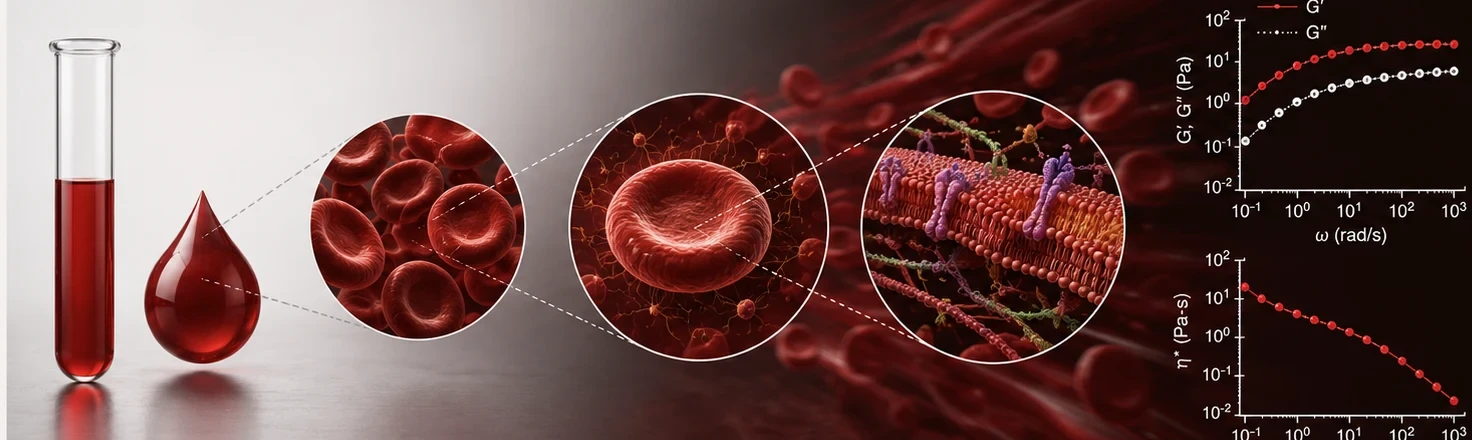
02MICROFLUIDICS / MICRORHEOLOGY
Microfluidics & microrheology
Microchannels and particle-scale methods used as precise experimental platforms for measuring complex-fluid behaviour.
Explore microfluidics ↗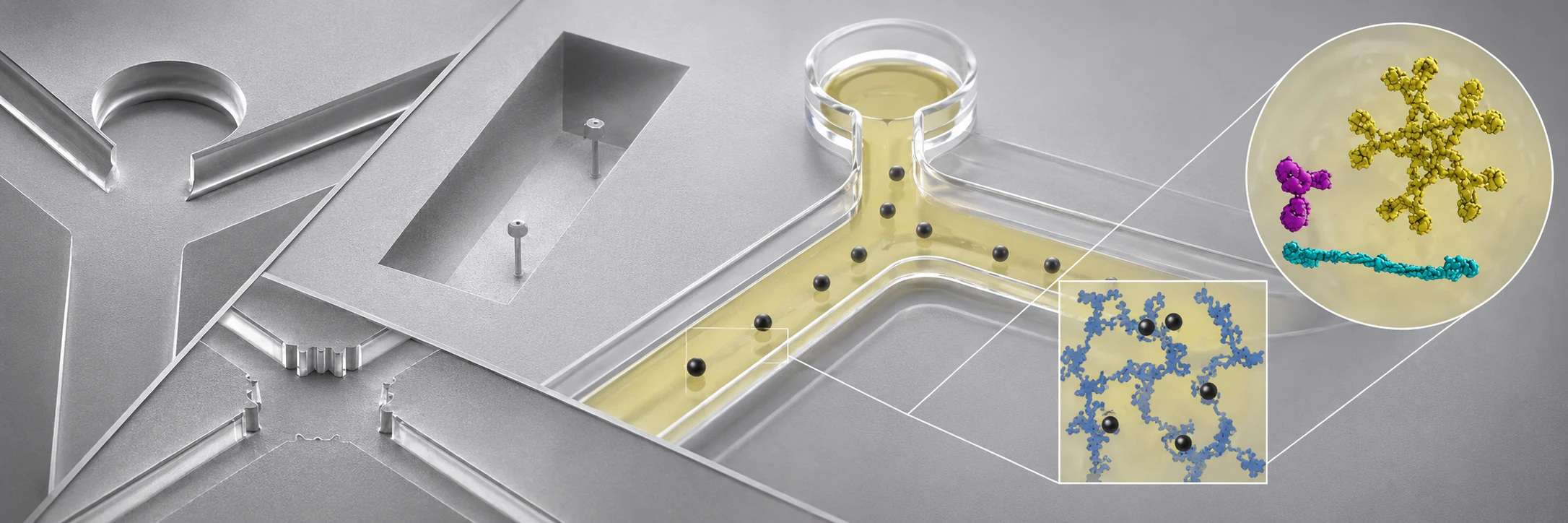
03MAGNETIC FLUIDS / MAGNETORHEOLOGY
Magnetorheology
How magnetic fields alter rheological response — including human blood and blood-analogue systems designed for controlled testing.
See MagneticBlood & PROMisH ↓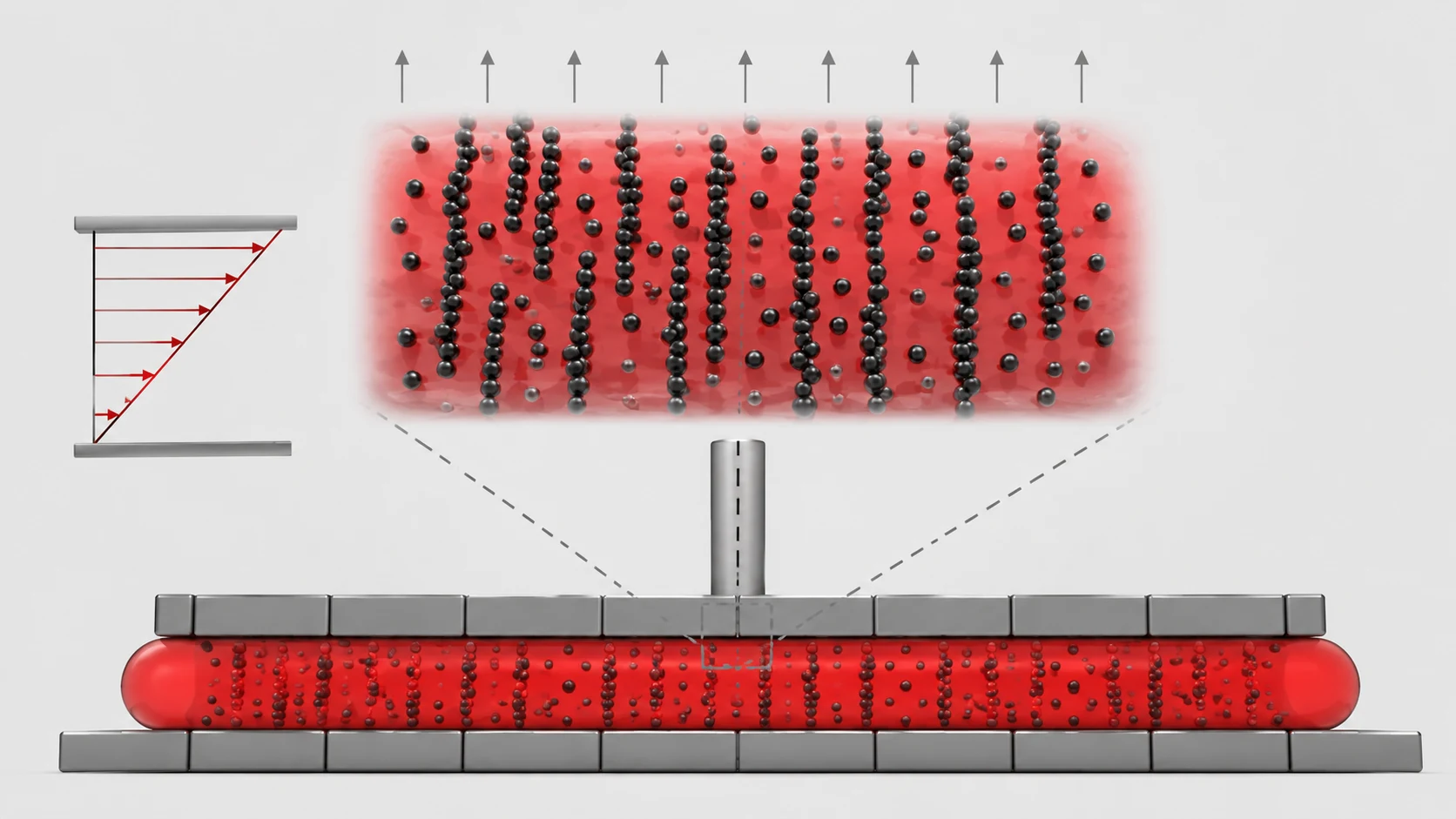
02 / CURRENT FOCUS

Current Research Focus
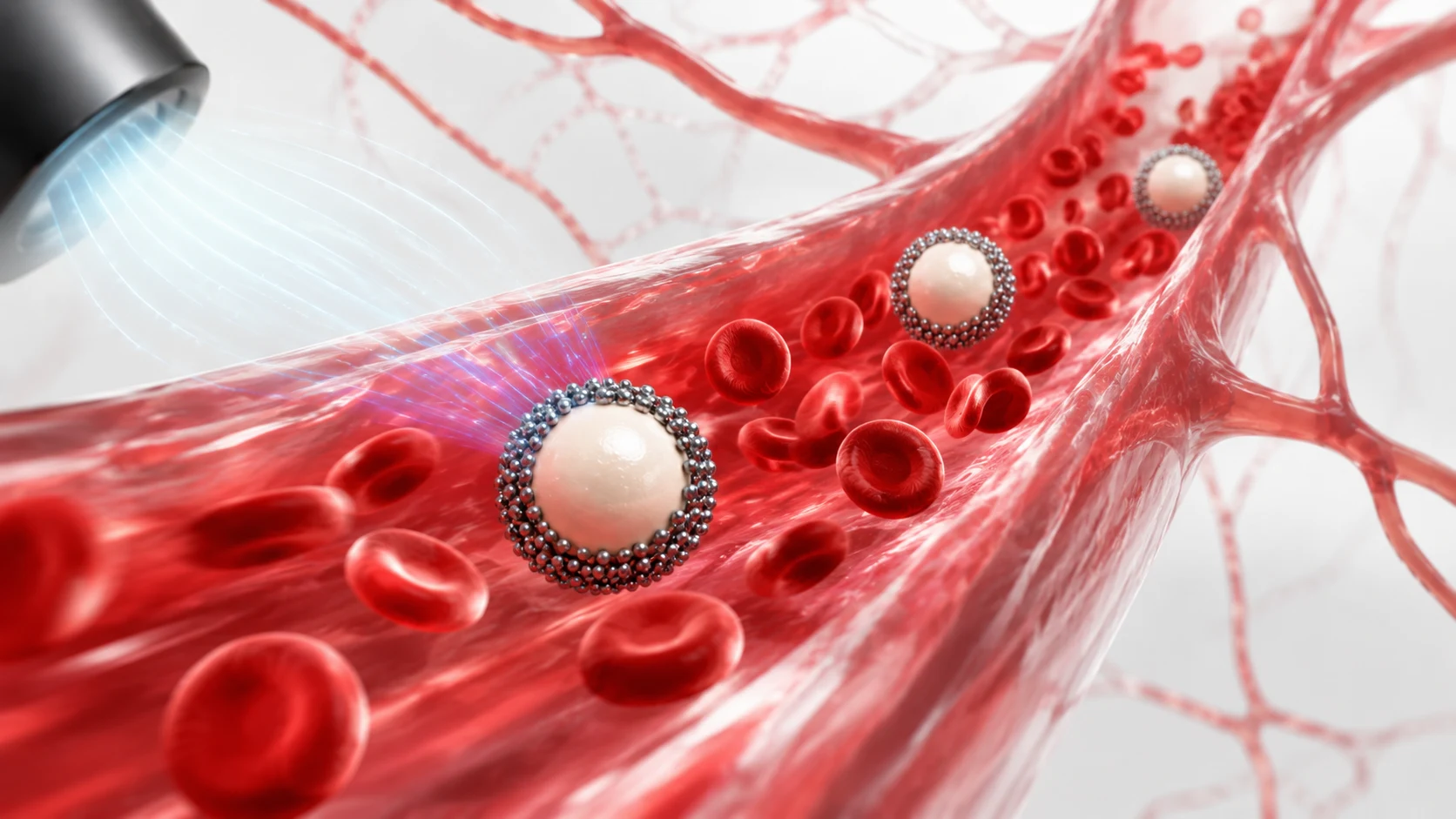
PROMisH is a current University of Porto project exploring rheologically optimised magnetic emulsions in hemotherapy. It extends a research line that already includes MagneticBlood and the study of blood response under external magnetic fields.
RESEARCH PROJECTS
Projects Led
Competitive research projects led as principal investigator or project coordinator, spanning biomedical microflows, magnetic biofluids and smart materials.

Magnetorheology of human blood towards the development of new treatment therapies.
MultiBlood
Multidimensional blood analogue fluid for in vitro tests.

Hemodynamic optimisation around 3D swimming microbots.
Rheinforce
Development of tailored damping materials based on cork composites and shear-thickening fluids.
OptiBots
Optimisation of swimming-microbot morphology for biomedical applications.
SELECTED PARTICIPATION
Collaborative Projects
Selected national and international projects that helped build the present research programme.
e.Biofilm
Biofilm engineering for environment, food and health.
HORIZON EUROPE ERA CHAIR2SMART
Engineered smart materials for smart citizens.
NORTE 2020FDM Printing Nozzle Optimisation
Experimental and numerical optimisation of extrusion flow in fused-deposition-modelling printing nozzles.
PROJECT COORDINATOR · ULTIMAKER B.V.RheoOptimized2DInks
Rheologically optimised inks based on two-dimensional materials.
FCT / FAPESPFERRO-CLEAN
Extensional rheology of ferrofluids for ocean clean-up applications.
FCT / MIT PORTUGALRheoChip
Rheometer-on-a-chip for the development of blood-analogue solutions.
FCTEXTENSION
Extensional flow of complex fluids in microchannels.
FCTANEURYSM
Hemodynamic study of cerebral aneurysms.
FCTNANOFIB
Nanofibrous materials: structure, design and application.
ERC STARTING GRANT
03 / PUBLICATIONS
Selected Publications
A selected research stream across rheology, magnetorheology, microfluidics, biofluids and advanced materials.
Search selected publications ↗For the live complete record, use CiênciaVitae, ORCID or Google Scholar.
04 / PEOPLE & SUPERVISION
Research Team & Supervision
Supervision spans doctoral, postdoctoral, master's and early-stage research across rheology, biofluids, microfluidics, magnetic fluids and smart materials.
SELECTED DOCTORAL SUPERVISION · MECHANICAL ENGINEERING · FEUP
Tomás Rodrigues Pinto
Womersley blood flow in obstructed capillaries.
Miguel Montenegro
Optimised rheinforced cork composites for antivibration applications (AntiVibCorkSTF).
Rui Rodrigues
Magnetorheology of human blood (MagneticBlood).
POSTDOCTORAL SUPERVISION
Ângela Ribau
Magnetorheology, blood rheology and magnetically responsive biofluids · MagneticBlood.
Erica Doutel
Hemodynamics, biofluid mechanics, microfluidics and medical microbots · HEMOSwimmers.
Samir H. Sadek
Extensional rheology, magnetorheology and complex-fluid characterisation · FERRO-CLEAN.
Interested in joining the research?MSc, PhD, postdoctoral and collaborative research enquiries are welcome when there is a strong scientific fit.
Get in touch ↗
05 / COLLABORATIONS
Collaboration & Knowledge Transfer
Research developed through interdisciplinary academic partnerships, international networks and sustained engagement with industry.
Academic & international
Research, training and co-supervision links developed across rheology, bioengineering, materials and fluid mechanics.
Industry & translation
Rheological characterisation, functional inks, additive manufacturing and advanced damping materials.
Networks & standards
Scientific leadership and service connecting the group to the wider rheology and standardisation communities.
06 / TEACHING & LEADERSHIP
Teaching & Academic Leadership
Fluid Mechanics II · Course Coordinator
Degree in Mechanical Engineering (L.EM), 3rd year, 1st semester.
Fluid Mechanics · Course Coordinator
Degree in Industrial Engineering and Management (L.EGI), 2nd year, 2nd semester.
Advanced Fluid Mechanics & Fluid Mechanics I
Teaching in the Master in Mechanical Engineering and Degree in Mechanical Engineering.
Introduction to Rheology: Fundamentals & Industrial Applications
Continuing-education course at FEUP.
Scientific Committee Member · Doctoral Programme in Mechanical Engineering
Member of the Scientific Committee of the Doctoral Programme in Mechanical Engineering at FEUP.
Deputy Coordinator · Fluids & Energy Section
Department of Mechanical Engineering, FEUP.
07 / ABOUT
Academic Profile
Laura Campo-Deaño is Associate Professor in the Department of Mechanical Engineering at the Faculty of Engineering of the University of Porto and an integrated researcher at CEFT.
Her trajectory began with a PhD in Physics at the University of Vigo, followed by postdoctoral work at KU Leuven and research at Oxford. At Porto, her work has connected experimental rheology with microfluidics, hemodynamics, biofluids and field-responsive systems.
Her research leadership includes five projects led as principal investigator and additional project coordination with industry and innovation funding, together with patents, registered software and technology-transfer activity. She also co-founded Rheinforce and serves as vice president of the Portuguese Society of Rheology.
CURRENTAssociate Professor · FEUP
CURRENTVice President · Portuguese Society of Rheology
TRANSFERCo-founder · Rheinforce Lda.
2008PhD in Physics · University of Vigo
2008—2010Postdoctoral Researcher · KU Leuven
2011—2013FCT Postdoctoral Fellow · FEUP / CEFT · Oxford academic visit in 2012
2013—2016Investigator FCT · FEUP / CEFT
2016—2023Assistant Professor · FEUP
2023→Associate Professor · FEUP
COLLABORATE
Contact & Collaboration
Rheology · biofluids · microfluidics · hemodynamics · non-Newtonian fluid mechanics · research collaboration.
campo@fe.up.pt ↗
Department of Mechanical Engineering · FEUP
Rua Dr. Roberto Frias · 4200-465 Porto · Portugal Official FEUP profile ↗
Rua Dr. Roberto Frias · 4200-465 Porto · Portugal Official FEUP profile ↗